From Paramedic Student to Lifesaver: Trent Gregoire Recognized with ICEMA EPIC Award
Publish Date: Sept. 15, 2026
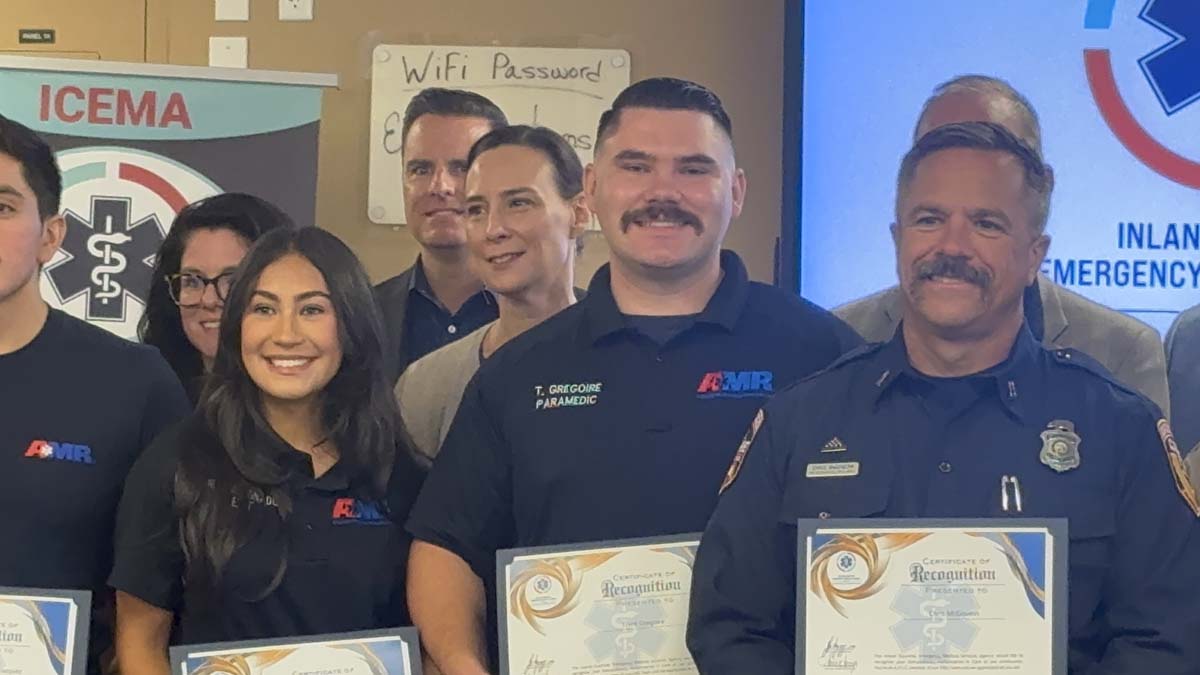
For paramedic students, classroom lessons and skills labs are designed to prepare them for the moment when their training is needed to save a life. For Crafton Hills College paramedic student Trent Gregoire, that moment came when he responded to a patient who was not breathing and had no pulse.
It was Gregoire’s first encounter with a patient in cardiac arrest, and he was then only a paramedic student. The outcome would be one he’ll never forget.
Faced with a situation where every second mattered, Gregoire became part of the team working to save the patient’s life. Drawing on the training, preparation, and skills he had developed during his paramedic training, he helped provide care during the resuscitation effort. The team’s efforts succeeded and the patient survived and made a full recovery.
This experience represented an important transition in Gregoire’s paramedic education. The scenarios practiced in the classroom suddenly had a face, a family, and a future attached to them. It was a powerful reminder of why paramedics train repeatedly for these critical moments and the difference prehospital care can make.
Gregoire’s role in the lifesaving response was later recognized by the Inland Counties Emergency Medical Agency (ICEMA), which honored him with an EPIC Award for his efforts.
The recognition is especially meaningful because Gregoire was still a student when he got the call to respond. Paramedic education requires students to move beyond knowing what to do and begin applying that knowledge in unpredictable, high-pressure environments alongside experienced EMS professionals. Gregoire’s first cardiac arrest response demonstrated the importance of that preparation.
The most meaningful recognition is the life that continues because of the work performed that day. The patient has since made a full recovery and is looking forward to something wonderfully ordinary: getting back on the soccer field.
For Gregoire, that is a reminder that behind every successful resuscitation is more than a statistic. There is a person who gets to return home, spend more time with family and friends, and get back to doing the things they love.
Gregoire entered the call as a paramedic student responding to his first patient without a pulse. He left having helped give someone the opportunity to live—and with an experience that will remain with him throughout his career in EMS.


