Fire Academy 114 Graduation Marks Completion of Rigorous Training at Crafton Hills College
Publish Date: May 14, 2026
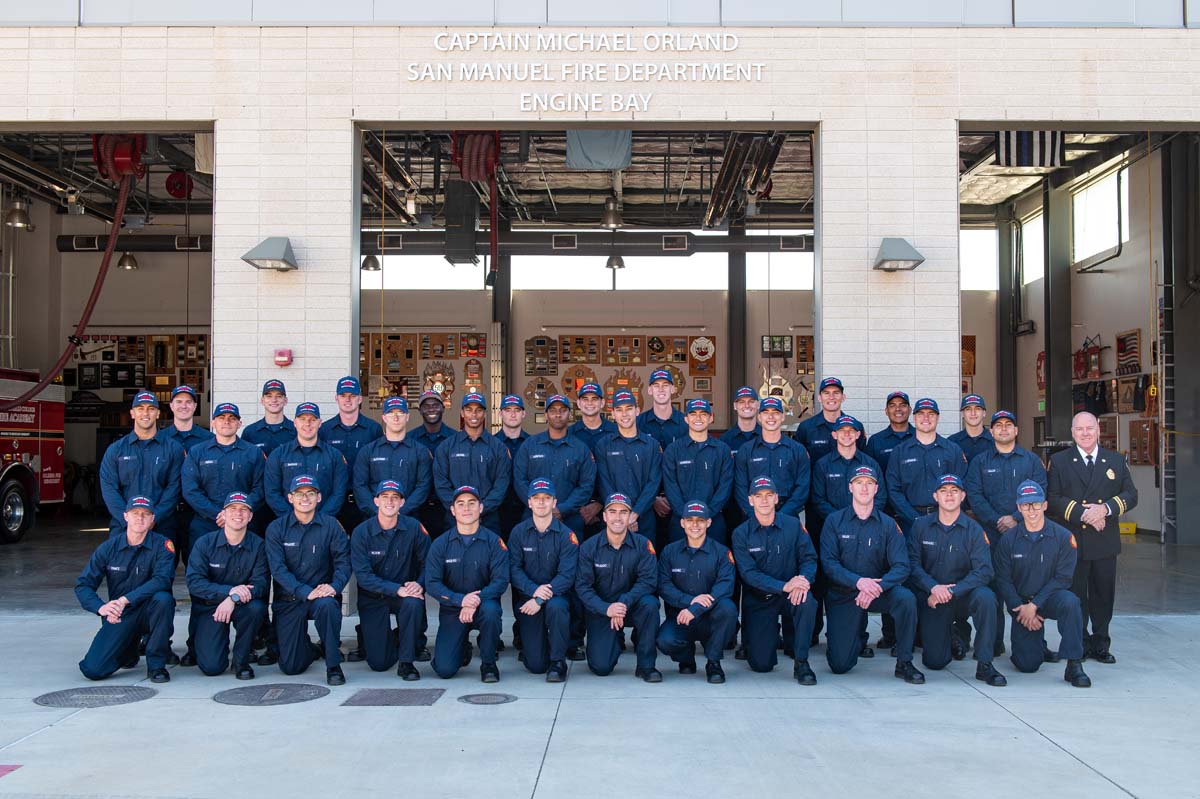
On May 13, Crafton Hills College recognized the graduates of Fire Academy 114 in a ceremony that marked the end of five months of intensive training and the start of their careers in the fire service.
Cadet speaker River Casner opened the evening with the academy’s motto: “Calm under chaos.” He described it as a practical standard, not just a phrase—staying focused in high-pressure situations where hesitation can lead to mistakes. His remarks centered on consistency: showing up through long days, physical fatigue, and outside responsibilities.
Casner emphasized that the group’s success came from persistence and accountability. “We showed up again and again,” he said, noting that while every cadet faced different challenges, they committed to finishing together. He also highlighted the bond formed within the cohort, crediting that support system as one of the most important outcomes of the program.
He thanked instructors for maintaining high expectations and preparing them for real-world demands and acknowledged families for their support during the academy.
Fire Chief Ryan Harold followed by recognizing the role of regional partners who support the academy through equipment, training resources, and collaboration. He noted that those partnerships are essential to maintaining the program.
The ceremony included four major awards:
- The Instructor’s Award, based on daily evaluations and overall performance, was presented to Alexander Williams.
- The MT241 Scholarship, honoring the legacy of Captain Mike Orland, was awarded to Walter Giles.
- The Most Inspirational Cadet, selected by peers, went to Robert Aquino for consistent attitude and commitment.
- The highest academic achievement, based on exams, skills testing, and overall scores, was awarded to Alexander Williams, finishing just one point ahead of the next cadet.
The program requirements included five state and national written exams and demonstration
of 92 skills at full proficiency, in addition to regular coursework and physical training.
The ceremony concluded with the presentation of diplomas and challenge coins, marking
the graduates’ transition into the fire service.


