The ASL Course That Became a Calling
Publish Date: March 3, 2026
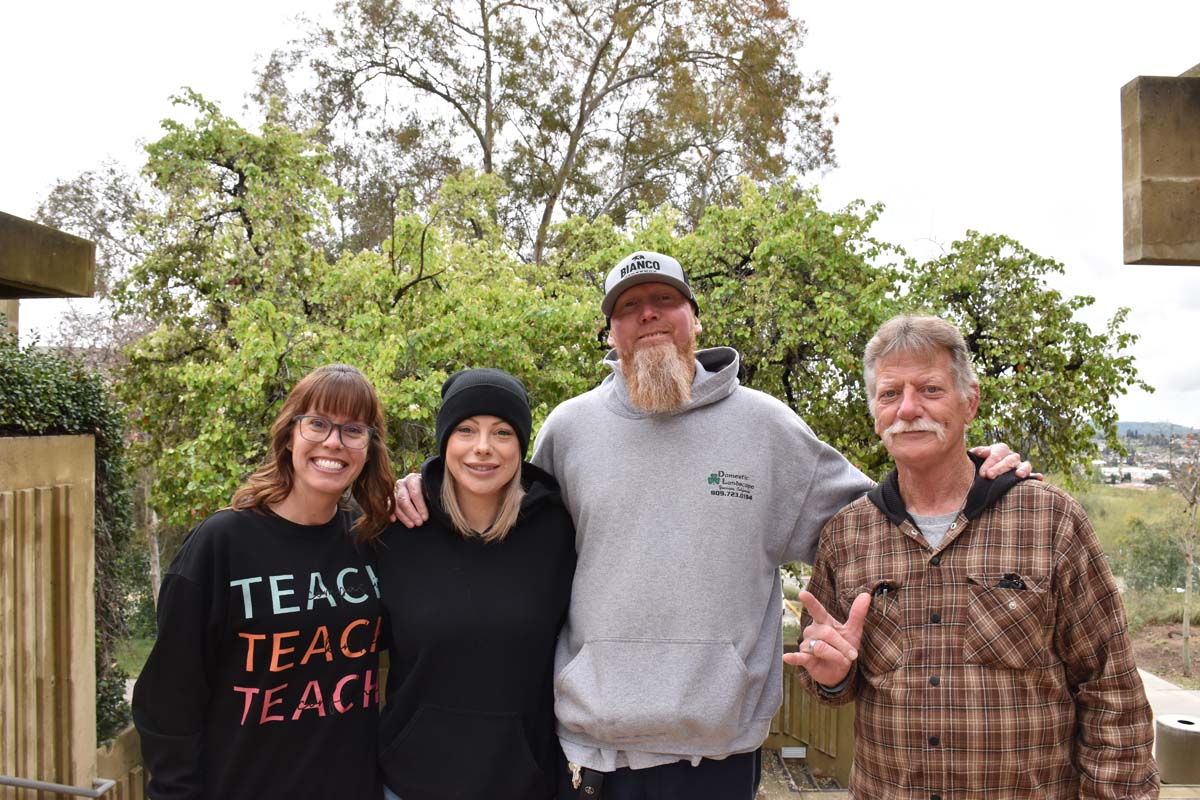
Amanda Sharples returned to college three years ago after a significant life transition, enrolling full time at Crafton Hills College to pursue a nursing degree. As she approached her final semester of prerequisite courses, she chose ASL over other spoken language course offerings. What she didn’t see coming was the December evening when those newly learned skills would become a lifeline for a stranger.
“At the time, it felt like just another requirement — interesting, but not something I imagined would play a meaningful role in my life beyond the classroom,” she said.
The night after taking her final ASL exam, Sharples and her boyfriend, Craig Henderson, went for a walk near their neighborhood. They came across a man sitting alone on the darkened patio of a recently closed restaurant. When Henderson waved said "hello," the man didn’t respond verbally.
“Amanda, I think he’s deaf. Can you communicate with him?” asked Henderson.
Despite feeling uncertain about her skills, Sharples realized this was exactly why she had taken the class. She stepped forward and signed to the man, asking if he was deaf.
“His eyes lit up,” she recalled.
The man, David, had not encountered anyone who could communicate with him in American Sign Language in some time. What began as a brief exchange turned into an hour-and-a-half conversation. Sharples learned David had been experiencing homelessness and was eager to find employment, but the communication barriers created by his deafness had made that extremely difficult.
“I can’t stop thinking about how easily this moment could have been missed,” Sharples said, “if I had let insecurity silence me instead of trying.”
That night, Sharples and Henderson gathered David a tent, pillows, a sleeping bag, and a backpack full of food, water, and basic supplies. The following day, they connected David with Set Free Yucaipa, a local church with a Cold Weather Shelter program. Within hours, David had a warm place to sleep, access to showers, and a supportive community around him.
The story didn’t stop there. Henderson, a small business owner, offered David a day of paid work doing landscaping. David accepted enthusiastically and now regularly helps on jobs.
“More than the paycheck, you could see how much it meant to him to feel useful, capable,
and seen,” Sharples said.
For Sharples, the experience reframed her entire academic journey. Returning to school
as a nontraditional student after major life upheaval had required what she described
as “humility, sacrifice, and a level of courage I didn’t always feel I had.”
The ASL course gave Sharples both foundational signing skills and a new perspective on the importance of communication access for the Deaf and hard-of-hearing community.
“What I thought was just another class became a bridge between isolation and connection, between hopelessness and opportunity,” she said.
Sharples is continuing her nursing prerequisites at Crafton Hills College and plans to apply to nursing school soon.


